
Trust in the tried-and-true back-of-the-box recipes for Easter - Jefferson City News Tribune |
- Trust in the tried-and-true back-of-the-box recipes for Easter - Jefferson City News Tribune
- When your oven breaks: new recipes from virtual workshops - OpenGlobalRights
- Two simple recipes for your leftover Easter Eggs - Orlando Sentinel
|
Trust in the tried-and-true back-of-the-box recipes for Easter - Jefferson City News Tribune Posted: 30 Mar 2021 10:13 PM PDT  Recipes from the back of boxes, packages or cans are godsent for an Easter dinner and can tug at your heartstrings in any year, but especially this one. They are minimalists, featuring easy-to-find ingredients and simple-to-follow directions. And that is exactly what is needed during these gloom-and-doom days brought upon by the COVID-19, which has disrupted holiday festivities. So while we are cooped up in our homes, why not turn to recipes found on staple items in the pantry cupboard, refrigerator or freezer for some of the best tried-and-true dishes. Some of the cans, boxes and packages feature the recipes in their entirety. Others feature photographs of entrees, sides and pies along with the product's website to learn how to make them. Not only are most of the recipes budget-friendly for these uncertain times but also they don't advocate complicated techniques. The recipes do not judge you for the gadgets and kitchen tools you own, or don't. So when they call for something to be mixed, you can use your faithful rubber spatula, cheap or pricey blender or state-of-the-art food processor. Being product-based, the recipes' sole aim is to shamelessly tout the manufacturing company and the other products made by it. This does not mean that you have to do that, too. If you don't have King Arthur flour for the bread, cake or cookie recipe, use Pillsbury or the store-brand one already in your pantry. The chocolate chip cookies will come out just fine whether the semisweet morsels are made by Ghirardelli or Nestle Toll House. Other than the difference in price and preference in brand, one company's sweetened condensed milk is no different from another. Also, with travel restrictions, there is no need to make a grocery store run just to follow a recipe verbatim. Stay within the parameters, and you will have a winner in your hands. The best part of following the recipe on a can or box is that you already have one of the ingredients — you are looking at it. Here are some recipes that have won likes and hearts: Upside-down pineapple cake: I will buy canned pineapple slices and maraschino cherries just to make this King Arthur flour recipe that I first came across on the back of a 5-pound bag. The cake does not take much effort to make and plops out of the pan perfectly — all with just one egg and not too much butter, sugar or flour. If you want the cake to look bright and cheery before taking it to the table or if you are posting a pic on Instagram, place a candied or maraschino cherry on top of the ones already on the cake. One-bowl brownies: The recipe was first printed inside the box of Baker's Chocolate some 20 years ago, and it has been a keeper since. That's right, you need just one bowl to make the brownies. Two cups of sugar might seem too much for one cup of flour in Baker's recipe, but the sweetness is cut by the unsweetened chocolate. BTW, the straightforward recipe does not call for any embellishments; the pecans do the work. But it is Easter after all and why not top the brownies with Reese's eggs to make them look festive. Raspberry gelatin cake: "There's always room for Jell-O" was a popular slogan in the 19050s and '60s. That jingle holds true even today at Easter when gelatin-based "salads" crop up in some fashion on the table. If the word "salad" can be used loosely with Jell-O, why not "cake"? Make a Raspberry Angel Cake, featured on the Kraft Heinz Co. website, with just three ingredients — frozen raspberries, raspberry gelatin and angel food cake. In the event, you can't find prepared angel cake in the store, don't go hunting for it; just use ladyfinger cookies or any other light and airy cookie. Whether it is served in the beginning or at the end of the meal, the "cake" will get the hashtag #whatsnottolike. Lemon pie: Thick, sticky and sweet, the Eagle Brand Sweetened Condensed Milk by Borden Inc. was first introduced in 1856. In 1931, homemakers were paid 25 cents for submitting recipes to the company, which received 80,000 in all. Over the years, recipes for smoothies, fudge, cakes and pies were printed on the labeling around the can. The luscious lemon cream pie on a graham cracker crust is classic 100 percent. Sweet, tangy and straightforward, it is a reminder that there is something to savor during these times. Crescent roll pie: In 1980, Pillsbury came out with an easy-peasy replacement for a pie crust — crescent rolls. And they have been popular since then with rookie bakers and those looking for shortcuts. Start by popping open a can with an image of the Pillsbury Doughboy. Then, separate the premade perforated crescent dough into triangles and place them in a pie plate, pressing them down and together. And voila, you have a crust. All you do next is pile on a filling, savory or sweet, and you'll have a ta-da moment. Tortellini soup: Upgrade a soup by tossing in some tortellini, whether it is stuffed with cheese, meat or both. Missouri-based Louisa Foods, the long-time maker of the famed St. Louis Style Roasted Ravioli, features a recipe for pasta soup with broccoli to promote its tri-color frozen tortellini made with tomato, spinach and fresh egg dough and stuffed with a blend of cheeses. When combined with a made-from-scratch broccoli soup, it makes for a satisfying side or can be a meal in itself. THE RECIPES LEMON CREAM PIE The recipe calls for spreading the pie with whipped topping or cream, but a dollop does the trick. The pie also does not suffer if the cream is totally omitted as it is creamy by itself. Makes: 8-10 servings 3 large egg yolks 1 (14-ounce) can Eagle Brand Sweetened Condensed Milk 1/2 cup lemon juice 1 (16 ounce) prepared graham cracker crust Frozen whipped topping, thawed, or whipped cream Lemon zest for garnish Heat oven to 325 degrees. Beat egg yolks in a medium bowl with a mixer. Add sweetened condensed milk and lemon juice until well mixed. Pour into crust. Bake for 30-35 minutes, or until set. Remove from the oven. Cool for 1 hour on a wire rack. Chill for at least 3 hours. Spread whipped topping or whipped cream over the pie before serving. Garnish with lemon peel, if desired. — Eagle Brand Sweetened Condensed Milk BAKER'S ONE BOWL BROWNIES Make sure it is cooled completely before lifting it from the pan to cut into squares. I decorated the nutty brownies with Reese's eggs to keep them festive. Makes: 24 servings 1 package (4 ounces) Baker's Unsweetened Chocolate 3/4 cup butter or margarine 2 cups sugar 3 eggs 1 teaspoon vanilla 1 cup flour 1 cup coarsely chopped Planters Pecans Heat oven to 350 degrees. Line 13-by-9-inch pan with Reynolds Wrap Aluminum Foil, with ends of foil extending over sides. Spray foil with cooking spray. Microwave chocolate and butter in large microwaveable bowl on high for 2 minutes or until butter is melted. Stir until chocolate is completely melted. Stir in sugar. Blend in eggs and vanilla. Add flour and nuts; mix well. Pour into prepared pan. Bake 30-35 min. or until toothpick inserted in center comes out with fudgy crumbs. (Do not overbake.) Cool completely. Use foil handles to remove brownies from pan before cutting to serve. — Baker's Chocolate RASPBERRY ANGEL CAKE Heavy whipping cream can be used in the place of the Cool Whip and the light and airy ladyfinger cookies instead of angel food cake if that's what you have at home. To unmold the dessert, dip a blunt knife in warm water and run it around the edge to loosen it. Makes: 16 servings 3 cups boiling water 2 packages (3 ounces each) Jello-O Raspberry Flavor Gelatin 1 package (12 ounces) frozen red raspberries, straight from freezer 1 package (7.5 ounces) round prepared angel food cake, cut into 21 thin slices 1 cup thawed Cool Whip Whipped Topping Add boiling water to gelatin mixes in a medium bowl. Stir 2 minutes until completely dissolved. Add frozen berries; stir until thawed. Pour into a 9-inch round pan sprayed with cooking spray. Arrange cake slices in concentric circles over gelatin, with slices overlapping as necessary to completely cover gelatin. Refrigerate 3 hours or until gelatin is firm. Unmold onto plate; top with Cool Whip. — Kraft-Heinz Co. TRICOLOR CHEESE TORTELLINI WITH CREAM OF BROCCOLI Remember not to cut the onion finely as it will be easier to remove the broccoli florets and tortellini without onion pieces sticking to them. Makes: 4 servings 1 tablespoon butter 1/4 cup chopped onion 1 package (32 ounces) chicken or vegetable stock (4 cups) 1 cup water 12 ounces broccoli crowns 1/2 (19-ounce) package Louisa frozen tricolor cheese tortellini (about 38 tortellini or 3 cups) 1 large Yukon Gold potato (about 6 ounces), peeled and cut into 3/4-inch pieces Salt and freshly ground black pepper, to taste 1/4 cup freshly grated Parmigiano-Reggiano cheese 3 tablespoons heavy whipping cream In a 4-quart saucepan, melt butter over medium heat. Add onion and cook for 5 minutes or until tender, stirring occasionally. Add broth and water; heat to boiling over high heat. Meanwhile, cut broccoli stems into 1-inch pieces; set aside. Cut remaining broccoli into small florets. Add florets and tortellini to broth; cook until mixture boils, about 4 minutes, stirring occasionally. With slotted spoon, transfer florets and tortellini medium to a bowl. Add broccoli stems and potato to broth; cook 10-15 minutes or until broccoli and potato are tender. Season with salt and black pepper. Transfer broth mixture to blender. With center part of lid removed to allow steam to escape and with clean towel loosely covering center, puree mixture until smooth. Add cheese and cream and puree to blend. Return broth mixture to saucepan over medium heat. Cook for about 5-10 until it is hot. Add tortellini mixture to the saucepan; stir to combine. Ladle soup into soup bowls. — Louisa Foods PINEAPPLE UPSIDE DOWN CAKE Remember to use room temperature butter, egg and milk as that will result in a lighter and fluffier cake. The cherries will look tired after the cake is baked and so if you want them to look cheery, place a candied or maraschino cherry on top of the baked one. The cake can be baked in an 8-inch pan but the seven pineapple rings would be crowded together. Makes: one 9-inch cake For topping 4 tablespoons butter 1/2 cup light brown sugar, firmly packed 1/4 teaspoon cinnamon 1/4 teaspoon ginger 1 (20-ounce) can pineapple rings in juice, drained Candied red cherries or maraschino cherries Pecans or walnuts, halves or diced; optional For cake 3 tablespoons butter, at room temperature 3/4 cup granulated sugar 1 large egg, at room temperature 1/2 teaspoon salt 1 3/4 teaspoons baking powder 1 teaspoon vanilla extract 1/8 teaspoon coconut extract, optional 1 1/3 cups King Arthur Unbleached All-Purpose Flour 1/2 cup milk, at room temperature Preheat the oven to 375 degrees. Lightly grease a 9-inch round cake pan. To make the topping: Melt the butter, and mix with the brown sugar, cinnamon and ginger. Spoon the mixture into the prepared pan. Space the pineapple rings atop the brown sugar mixture. Place a cherry in the center of each ring. If you're using nuts, scatter them in any empty spaces. To make the cake: Beat the butter and sugar until fairly smooth. Beat in the egg, then the salt, baking powder, vanilla extract and coconut extract, if using. Add the flour alternately with the milk, mixing at medium speed and beginning and ending with the flour. Once the last of the flour is added, mix briefly, just until smooth. Spoon the thick batter into the prepared pan, spreading it to the edges of the pan. It may not cover the pineapple entirely; that's OK. Bake the cake for 30-35 minutes, until a toothpick or cake tester inserted into the center comes out clean. Remove the cake from the oven, wait 3 minutes, then turn the pan over onto a serving plate. Wait 30 seconds, then lift the pan off. If anything sticks in the pan, just lift it out and place it back on the cake. Serve warm or at room temperature. — King Arthur Flour ITALIAN ZUCCHINI CRESCENT PIE It's important not to overcook the zucchini as that could result in a soup top when the pie is baked. Let the pie rest for at least 10 minutes before it is cut to allow the filling to set. Makes: 6 servings 2 tablespoons Land O'Lakes butter 4 cups thinly sliced zucchini 1 cup chopped onions 2 tablespoons dried parsley flakes 1/2 teaspoon salt 1/2 teaspoon pepper 1/4 teaspoon garlic powder 1/4 teaspoon dried basil leaves 1/4 teaspoon dried oregano leaves 2 Land O'Lakes eggs, well beaten 2 cups (8 ounces) shredded Muenster or mozzarella cheese 1 can (8 ounces) Pillsbury refrigerated crescent rolls 2 teaspoons yellow mustard Heat oven to 375 degrees. In a 12-inch skillet, melt butter over medium-high heat. Add zucchini and onions; cook 6-8 minutes, stirring occasionally, until tender. Stir in parsley flakes, salt, pepper, garlic powder, basil and oregano. In large bowl, mix eggs and cheese. Add cooked vegetable mixture; stir gently to mix. Separate dough into eight triangles. Place in ungreased 10-inch glass pie plate or 12-by-8-inch (2-quart) glass baking dish or 11-inch quiche pan. Press over bottom and up sides to form crust. Firmly press perforations to seal. Spread crust with mustard. Pour egg mixture evenly into crust-lined pie plate. Bake for 18-22 minutes or until knife inserted near center comes out clean. If necessary, cover edge of crust with strips of foil during the last 10 minutes of baking to prevent excessive browning. Let stand at least for 10 minutes before serving. — Pillsbury  |
|
When your oven breaks: new recipes from virtual workshops - OpenGlobalRights Posted: 30 Mar 2021 02:48 PM PDT
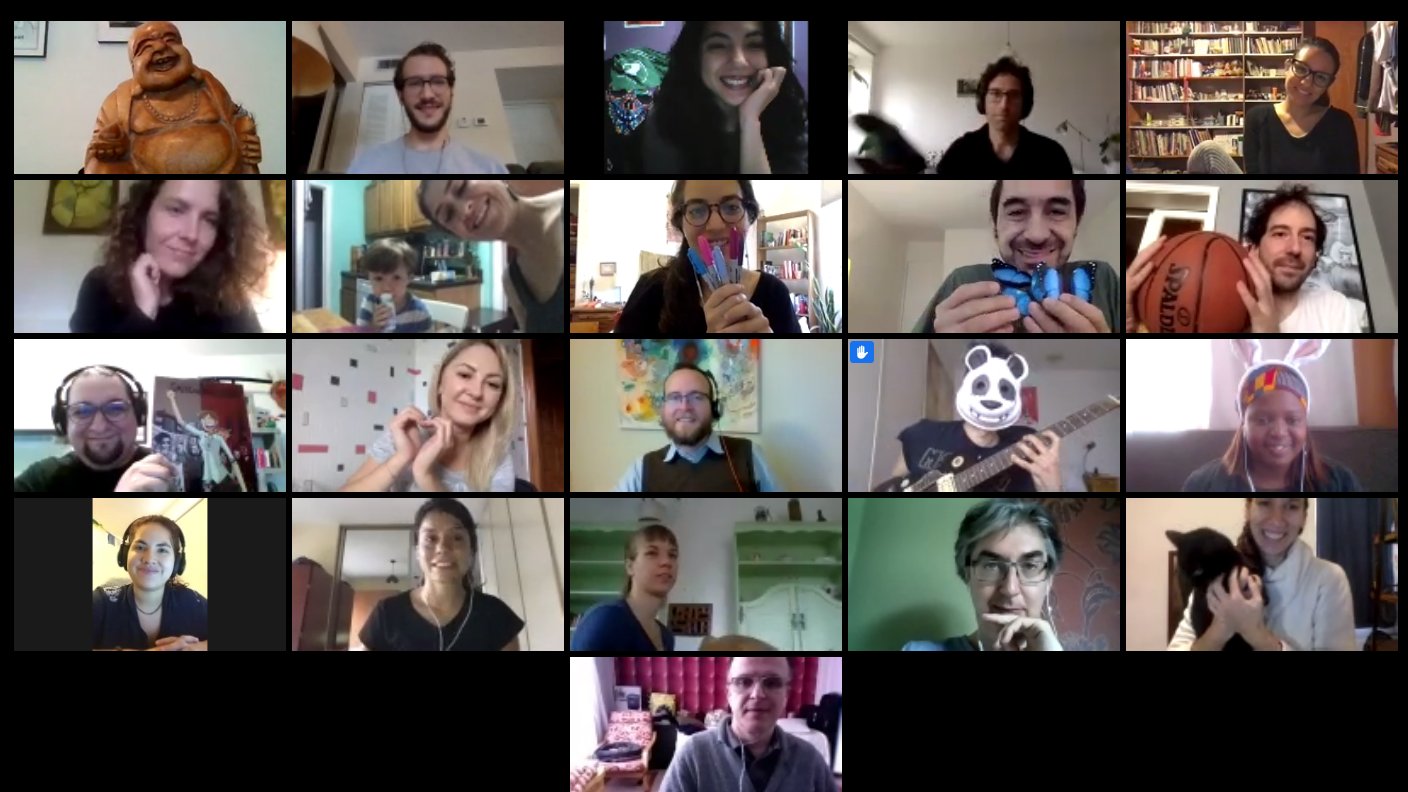
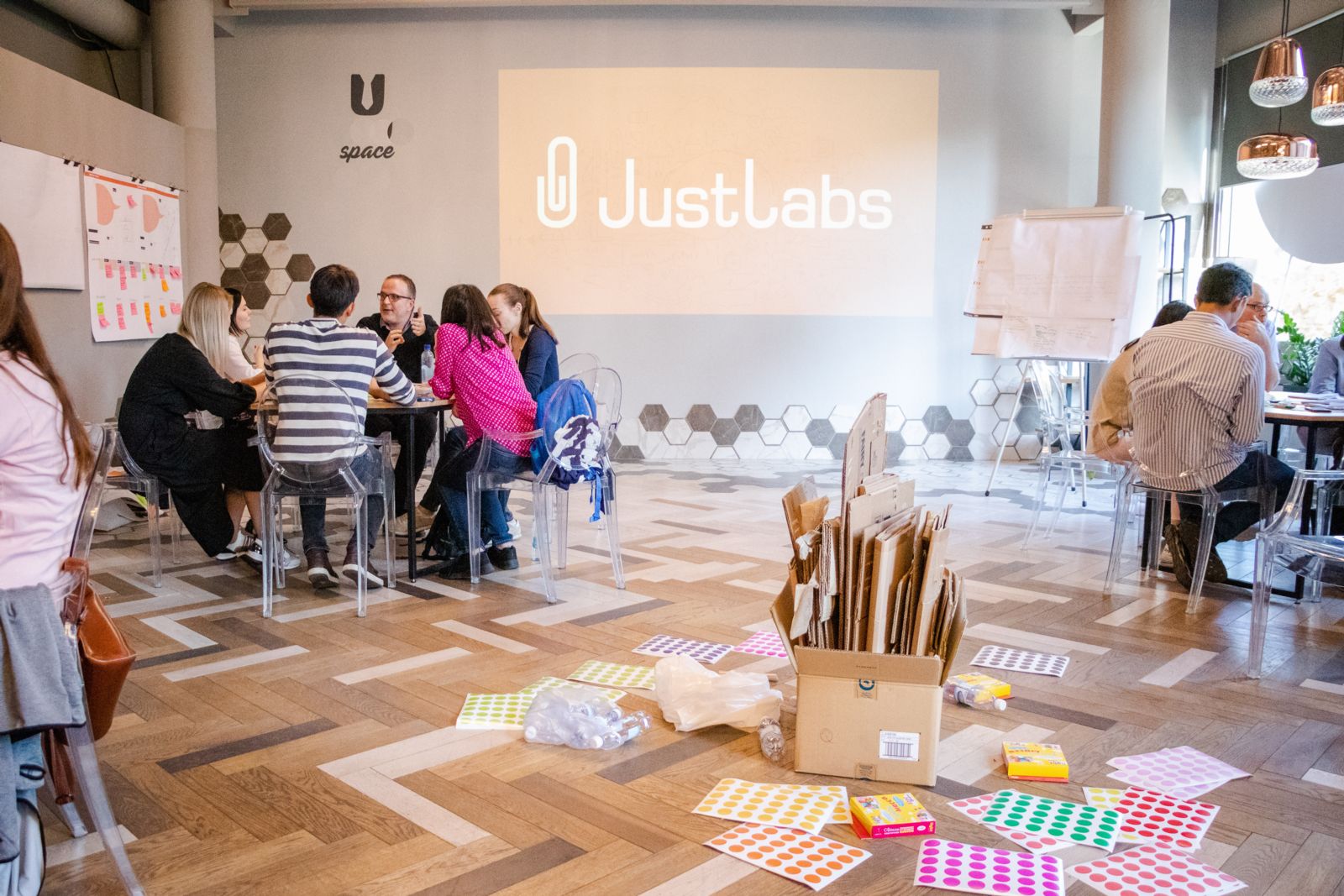
Participants in an Espresso Lab bring their physical world into the virtual space. Image courtesy of JustLabs "Everything you touch you change. Everything you change, changes you." – Octavia Butler In early 2020, our oven broke. Well, a lot of things broke, one of which was our oven. We both work with JustLabs, which is a creative kitchen of sorts where we experiment with new approaches to human rights work. (Full disclosure: JustLabs is the parent organization of OpenGlobalRights. But we went through the standard editorial process, had to re-write several of our favorite puns, and even wrote this disclaimer to make our editors happy.) If JustLabs is a kitchen, workshops are our oven. Like many other organizations interested in bringing experimental tactics down to the level of personal experience, JustLabs has relied on in-person gatherings to cultivate immersive, creative experiences. They are how we turn raw dough into delicious cookies. When 2020 hit, we were left with a version of the same question everyone who relied on physical encounters for their work was asking: how do you bake without an oven?
Scenes from a typical JustLabs workshop in-person. The frustrating and wonderful thing about being forced into change is when, as Ellen Sprenger puts it, resignation turns into curiosity. There is no shortage of reasons to be well-versed in virtual baking—not least of all because our work spans so many time zones. But how do we maintain community and trusting spaces online? How do we design creatively challenging, collaborative experiences when we're not sharing a physical environment? These are the questions we started with. But as we were trying to cook up a response in that changing kitchen of 2020, our process led us to see more clearly that we were missing a key ingredient across our work. Enter: the Espresso Labs, our second oven. Maybe the kitchen always needed...another oven?"The more you know, the more you can create. There's no end to imagination in the kitchen." – Julia Child We spend a lot of our time thinking about how social changers change. We use workshops to crack open the tactical boxes we usually operate inside of. In the in-person world, we would rent fun co-working spaces and bring artists and creatives into rooms with lawyers and researchers to try to open people up to new ways of thinking about human rights. But what happens after the brainstorm? Where do once-inspired individuals turn when they find themselves back in their own regular kitchen, with its institutionalized habits, routine pressures, and drawer of familiar utensils? One way our team has approached this challenge is by working with funders to create a structure for organizations to apply their workshopped ideas in practice. The Narrative Hub is one such initiative. Created together with the Fund for Global Human Rights, the project has accompanied and supported four organizations around the world in thinking creatively about ways to integrate narrative ideas into their organizations' work. "I was pretty much familiar with the concepts of all of the sessions, but I was somewhat drifting from them in my day-to-day work. The sessions gave me the reflective space to put my mind back into these ideas." - Espresso Lab ParticipantBut new habits are hard to bring to life, especially in organizations. And design-thinking workshops and dedicated projects can add to the sense that any given lens—be it narrative, foresight, or creative activism—is something siloed to a specific project or a specific output, and not a broader shift in the mindsets and tools that human rights practitioners use. Thinking outside the ovenThe Espresso Labs offer a different recipe. Rather than high-intensity, in-person immersion, they offer small scale repetition with a community of familiar faces (we hold them monthly; each session lasts less than two hours). In these labs, we think about creativity as a mindset, cultivating professional creativity by attending to the personal creative self. So far we've played with creative activism, hope-based communications, foresight, mindfulness for creativity, dance-freestyling human rights, and everyday awe through origami. So, how did we get here? Here's a quick recap: Step 1: Find your inner baker. Moving online requires intention. It took three months of thoughtful conversations about what JustLabs could offer the inundated online environment before we launched a pilot. Our purpose was shaped by the stress, isolation, and frustration we were seeing in our community. Though tempted by public-facing webinars and live videos, we recognized that responding to our community would require a more intimate and interactive space. Step 2: Learn from those who know how to bake. To quote the iconic Boromir meme, one does not simply copy and paste an in-person program onto Zoom. Moving online requires translation. We were fortunate to learn from the brilliant team at Spring, but there are all kinds of free resources out there, like Blueprints for Change's tips on hosting virtual meetings, The Commons' list of digital tools, or Jeanne Rewa and Daniel Hunter's guide to leading groups online. "You have to step away from the daily grind to think creative things. It's a discipline that our sector isn't great at. We have to get better at carving out space and downtime to let our brains think in these more proactive, creative, experimental mindsets." – Espresso Lab ParticipantSpring's virtual facilitation training showed us how online tools can still center people, making virtual spaces intimate, caring, and expressive. Here are a few of the other handy tips we picked up from them: It takes three times as long to design online spaces than in-person ones; keep sessions short and incorporate physical movement; not everything has to be done online; reduce stress by setting the expectation that technology will be imperfect; keep the experience smooth by having both a lead and a process (tech) facilitator; and the experience you want to create should inform the technology tools you use. Step 3: Prepare the dough. Did we want to mimic our in-person workshops' in-depth exploration of a topic, or treat the online experience more like a creative spark? Go for open and public-facing, or small and intimate? Guided by the intentions we set at the beginning, we decided on the latter for both. Step 4: Taste-test. Our pilot launched in June. At the time, we were still thinking of the labs in terms of "skills-training." But what people said they appreciated most was having a space to step away from the stresses and pressures of their daily work, and into a lighthearted, creative, fun space with other people who were facing similar challenges. Step 5: Become the baker you were born to be. We made the Espresso Labs a regular part of our program, and started integrating lessons we learned into our project-based workshops and regular meetings. The most important one? Even—no, especially—human rights defenders need spaces for human interaction and expression in their work, especially in the boxy online world.
Our game-show inspired problem-solving activity for the narratives group: Wheel of Obstacles. Don't stop bake-lieving.For one of our Espresso Labs, titled Dance, Dance, (Social) Revolution, our facilitator Ariel Sim offered a great analogy. Being creative in human rights is like freestyling in dance: freestyling honors the core elements of a practice, while still making space for the unique interpretation of the dancer. But (if you move like us), you don't get thrown from your first dance class directly into a freestyle jam session (aka, a cypher). Dancers support one another, building up confidence in their own expression over time. The Espresso Labs are our freestyling crew. And it's working. Community members have told us the labs give them energy and encouragement to insert more fun and creativity into their daily work environments. Our team has experienced the same thing: facilitators like Ariel are bringing new aspects of themselves into their facilitation, we're actively making more creative space for our day-to-day problem-solving (or problem "shifting", as our colleague Rami Efal proposed), and we're thinking much more intentionally about the personal dimension of the tactical and organizational changes we're encouraging. Throughout this process, our colleague Ella Scheepers has consistently reoriented us towards principles of emergent strategy: change begins at the level of connection and relationship. Changing human rights tactics and outcomes requires looking at how we show up to our work and to one another. The online space often feels impersonal, so we created a space that invites people to bring in the parts of themselves so often left at the door (or Zoom waiting room) of our work. What else will emerge? Octavia Butler reminds us that we are shaped by what we change. New recipes are there for the making. On your marks, get set, bake.
This article is a part of a collection by JustLabs and the Fund for Global Human Rights on bringing narrative initiatives to life in human rights work.  |
|
Two simple recipes for your leftover Easter Eggs - Orlando Sentinel Posted: 31 Mar 2021 02:00 AM PDT  The smell of the cinnamon and star anise warming on the stovetop is as good as any simmering potpourri you could find. And truly, the brine-permeated eggs are artful and gorgeous on the plate. Other recipes I perused included rice vinegar, mirin, garlic, chilies — any of these would be phenomenal adds I'd consider on my next go-round.  |

| You are subscribed to email updates from "recipes" - Google News. To stop receiving these emails, you may unsubscribe now. |
Email delivery powered by Google |
| Google, 1600 Amphitheatre Parkway, Mountain View, CA 94043, United States | |
from What to Cook https://ift.tt/2O7lQVl