
Bobby Flay on the next generation of cooking heroes - CBS News |
- Bobby Flay on the next generation of cooking heroes - CBS News
- What to Cook This Week - The New York Times
- What to Cook This Weekend - The New York Times
- Mark Peel helped codify the notion of American 'urban rustic' cooking - Los Angeles Times
|
Bobby Flay on the next generation of cooking heroes - CBS News Posted: 20 Jun 2021 07:19 AM PDT When I was in grammar school, my afterschool TV watching consisted of two superheroes: Julia Child, and the "Galloping Gourmet," Graham Kerr. Julia would bring classic French dishes like Coq au vin and Cassoulet to life, while Mr. Kerr was the ultimate in fancy 1970s bachelor cuisine, and would end every show plucking a lovely lady from his live audience to sit and have dinner with. Two different approaches, but they both helped shape the dinner tables of America for decades. I'll be honest, I cannot watch an old clip of our early days. But as a gift to the loyal "Sunday Morning" viewers, here you go: 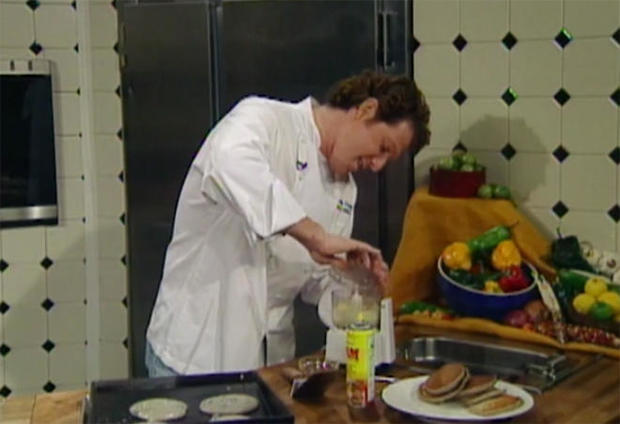
Ultimately, the network found its groove, and very quickly became the go-to place for everything cooking. Personally, I credit Food Network for changing the landscape of how we look at food in this country across the board. Emeril led the charge of the network, and became a household name. Finally, after decades of airtime, Julia Child and the Galloping Gourmet had some company influencing cooks at home. Every successful venture breeds competition, and creative minds stir up alternatives to the norm. My 25-year-old daughter Sophie and I have a podcast called "Always Hungry," where we talk about our lives as it pertains to food and lifestyle. Now just to be clear, Sophie did not follow her dad into the professional kitchen. She's a successful broadcast journalist in Los Angeles, and her cooking skills … well, let's just say they're definitely not her strongest suit. I will admit, like a lot of people I do go down the TikTok rabbit hole sometimes, but never really thought about it for cooking ideas. I'm still trying to figure out how @j4ckson7 does what he does: I started to take notice when the now-famous pasta dish with cherry tomatoes and feta cheese broke the internet with the force of a Kardashian. So, when Sophie wanted a Penne alle Vodka recipe, she went right to her source: Jeremy Scheck, better known by his two million followers as @scheckeats. Not only does his food look good, this current student at Cornell University knows what he's talking about, and It all happens in less than 90 seconds. The game is changing and it's making every generation better at our stoves. Today, TikTok is the trend, and who knows what's next? Thankfully, technology allows us to recall the things that make us feel best. So, from my kitchen to yours, there's only one thing left to say: Take it away, Julia … "Bon Appetit!"  |
|
What to Cook This Week - The New York Times Posted: 20 Jun 2021 07:30 AM PDT  Good morning. Father's Day, first day of summer, Bieber on the car radio as neighbors cruise to the beach: It'd be a nice one to cook outside if you can, or to pretend that you're cooking outside if you can't. I like these thin-cut, jalapeño-marinated grilled pork chops (above) for the menu, with their vegetal zing and cilantro thrum, topped with a red onion relish. Maybe some mango slaw on the side? That'd be nice. Of course, you might feel the same way about a pizza from your favorite place, a can of cold beer or glass of lemonade, some Mr. Frosty on the stoop afterward. You don't have to cook your own food to feel the pleasures of the season. But I think it helps. I think it grounds us. I think cooking regularly, especially after more than a year of cooking regularly, is a good habit to keep. So make those pork chops or whatever you'd like, and on Monday maybe you could end your day with an orzo salad with peppers and feta, a kind of Basque piperade over the pasta, even better at room temperature than hot from the stove. Make it early in the evening and eat it later on, when the sun has dipped. For Tuesday's meal, how about black pepper chicken thighs with mango, rum and cashews? Excellent with rice! On Wednesday, you could consider roasted salmon with miso rice and ginger-scallion vinaigrette, though if that's too much preparation for the middle of the week, you wouldn't go wrong with a simple pasta with mint and Parmesan. (Want to make that pasta luxe? Add some crab meat and paper-thin slices of seeded jalapeño.) Recall the pleasures of childhood on Thursday, with this ace new recipe for crispy fish with tartar sauce, like something out of a deep fryer but actually cooked in the oven. The tartar sauce goes on the fish before the bread crumbs, which helps them adhere and really flavors the fish. Smashed and fried potatoes to go with, please. And then on Friday, how about a beer-can chicken, with a classic pasta salad to go with it — or this herby potato salad with smashed olives, or this pickleback slaw? Thousands and thousands more recipes to cook this week are waiting for you on New York Times Cooking. You need a subscription to access them all, but I'm hoping you'll find that of value: These are good recipes we've assembled! Subscriptions in any case support our work and allow it to continue. Please, if you haven't already, subscribe today. We are as always standing by to help, should something go wrong with your cooking or our technology. Just write cookingcare@nytimes.com. Someone will get back to you, I promise. And if you've got some extra time today and want to spend it on a device, check us out on Instagram, and on Facebook as well. On Twitter, you'll find links to our news articles. And you should absolutely visit us on YouTube, where Yewande Komolafe recently demonstrated the preparation of Brazilian moqueca, a beautiful seafood stew. Now, it's a far cry from yogurt and saffron, but James Ellroy's latest novel has arrived, "Widespread Panic," based on the real-life exploits of the Hollywood fixer Freddy Otash, the inspiration for Jake Gittes, Jack Nicholson's character in the film "Chinatown." He's in purgatory and the only way out is confession: "My meshugenah march down memory lane begins NOW." Kurt Andersen has a seven-part podcast rolling out, "Nixon at War," about Vietnam and the president who oversaw its terrible end. Get started on that. Here's Helena Bonham Carter and Gillian Anderson in conversation, in Interview, of course. Finally, two great reads in The Times: Tejal Rao on the resurgence of Los Angeles's Chinatown and Priya Krishna on the trailblazing television chef Martin Yan. Enjoy those and I'll be back on Monday.  |
|
What to Cook This Weekend - The New York Times Posted: 18 Jun 2021 07:30 AM PDT  Good morning. I took to The New York Times Magazine this week to write about a remarkable 20th century restaurateur named Henri Charpentier, who was raised in the kitchens and dining rooms of the French Riviera, labored under Auguste Escoffier and César Ritz in Paris, and moved to New York in the early 20th century, where he opened his restaurant Henri's, in Lynbrook. One of the dishes Charpentier served there showed up in a cookbook my friend Julie found in a used bookstore in the Midwest a few years ago: fluke au gratin (above). It's a remarkable, elegant dish, and a simple preparation appropriate to any firm, mild white-fleshed fish. Make a buttery sauce with chopped shallots, garlic, chives, parsley and mushrooms, and brighten it with lemon juice and white wine. Spoon some of it into a shallow roasting pan, place your fillets on top, then add the rest of the sauce, some bread crumbs and dots of butter. Roast it for a few minutes until the fish has just cooked through. Serve with rice and asparagus, maybe? It'd be a lovely meal on Saturday night. Charpentier was a raconteur (his memoir "Life à la Henri" reads a bit like a first draft of "A Gentleman of Moscow"), and he long insisted that he invented the dessert crêpes Suzette at 16, while serving a dinner for the Prince of Wales, later King Edward VIII. In his telling, a beautiful French girl named Suzette was there. While making tableside crepes for dessert, he accidentally flamed them with brandy, but passed it off as intentional. The prince thought the dish tasted superb. Charpentier offered to name it in his honor. But the prince told him, "We must always remember that the ladies come first. We will call this glorious thing crêpes Suzette." Historians quibble with this story. But maybe you could make the crepes for dessert all the same. Other things to cook this weekend: recipes to celebrate Juneteenth on Saturday; recipes to celebrate Father's Day on Sunday. Now, it's nothing to do with fancy salts or cast iron pans, but I think you will enjoy this excerpt from the photographer Kristin Bedford's new book "Cruise Night," about modern lowrider culture in Los Angeles, in Los Angeles Magazine. And you ought to check out "Midnight Diner: Tokyo Stories," on Netflix. If you're in New York or planning a visit soon, do leave time for the Alice Neel show at the Metropolitan Museum of Art. Finally, new music to play us off: Clairo, "Blouse," featured in the latest Playlist of new songs, in The Times. I will, as always, see you on Sunday.  |
|
Mark Peel helped codify the notion of American 'urban rustic' cooking - Los Angeles Times Posted: 20 Jun 2021 05:56 PM PDT  If you whittle down the list of restaurants that shaped modern Los Angeles dining culture — the places where the now-stereotypes of California cooking were once fresh revelations, from which influences continue to ripple even if younger generations have no knowledge of their origins — Campanile would hover in the top five, maybe even the top three. Mark Peel, who died Sunday, and his then-wife, Nancy Silverton, opened the restaurant in 1989 at 624 S. La Brea Ave., in an arched, ornamental Spanish Colonial Revival set piece of a structure built by Charlie Chaplin in 1929. Until they split in 2005, they were viewed by the world as the first couple of the nation's emergent California-Mediterranean restaurant ethos. Both chefs had worked for Wolfgang Puck during his ascendance with Spago. They helped him tease out his wild, New West vision of food as a grab bag of fusion flavors and the kitchen as a playground of ideas. For their own restaurant, though, they moved in the opposite direction of smoked salmon pizza and lobster spring rolls. Peel had cooked at Chez Panisse, and he drove the farm connection at Campanile literally, at first hauling produce himself from Chino Farms in Rancho Santa Fe, two hours south of the restaurant. With his mastery of the grill and Silverton's wondrous bread-baking and pastry programs, the pair codified the notion of American "urban rustic" cooking. I had my first meal in Los Angeles at Campanile. It was spring 1997. I was 24 and worked at a restaurant in Seattle, making desserts and cooking brunch on weekends. My best friend, Kazzie, was trying to make it as an actor in L.A. I flew down to see her, and our dinner plans — straight from the airport— were a long-awaited, foregone conclusion. Kazzie had been to the restaurant's famous adjunct La Brea Bakery but never to Campanile — an experience we'd both been saving up for. Memories of that night will sound like cliches now: The startling, direct earthiness of fava puree enriched with good olive oil and lightened with lemon, the smoke that clung to swordfish seared with inky grill marks. I'd ordered it in the hopes of tasting swordfish that wasn't overcooked, like it was in basically every restaurant in those days, and my risk was rewarded. Kazzie's entree was a crisp flattened chicken with a garlicky parsley salad, a menu staple. The dish wasn't as austere as it sounded: Peel dressed it in a sauce he called "beurre fondue." We asked for every dessert. I best remember a galette of both fresh and dried cherries. Vanilla bean and balsamic vinegar flavored the filling, and the ways their taut contrast complemented the fruit stretched my brain as a young cook. As baseline and even old-fashioned as the meal sounds, few chefs, then or now, really pull off the simple-yet-profound style of cooking with consistency and abject deliciousness. Campanile did. Legends of Los Angeles food criticism — Ruth Reichl, Jonathan Gold, S. Irene Virbila — all pointed out the restaurant as a place they loved so dearly that they were as much regulars as professional reviewers can be. After Silverton and Peel divorced, Silverton left to start the third act of her blockbuster career with Osteria Mozza and Pizzeria Mozza. Peel continued running Campanile until it closed in 2012 (Silverton's father was the landlord) and was rechristened as République by Walter and Margarita Manzke. Peel's influence lives on in the chefs who passed through his kitchen, many whose names remain well-known in Los Angeles: Suzanne Goin of A.O.C., Matt Molina of Hippo (previously executive chef of Mozza), Bryant Ng of Cassia and Suzanne Tracht of Jar are among them. He never opened another restaurant with the seismic impact of Campanile, but he found a way to remain in the center of Los Angeles' evolving culinary identity: Until the end of his life, he ran Prawn Coastal Casual, a stall specializing in fried seafood baskets and shrimp salads, in Grand Central Market, among the vendors selling pupusas, galbi, bentos, tacos, adobo bowls and rigorously seasonal fruit pies. His legacy also continues in subtler ways. In 1998, four years before I became a restaurant critic, a book called "Dining Out," written by Andrew Dornenburg and Karen Page, was published. It details the history of American restaurant criticism and contains dozens of interviews with writers, chefs and other figures the authors call the "food intelligencia." As someone working in restaurants who wanted to write about them, I read the book over and over. An interview with Peel on Pages 112 and 113 has stayed with me for nearly 25 years. It's framed in a box with the title "Is the Customer Always Right?" Peel tells the story of putting a pulled-chicken sandwich on the lunch menu at Campanile that was tossed with aioli and served with bacon. L.A. being L.A., customers right away requested the sandwich minus aioli and bacon — and then complained about it being awful. Peel urged the servers to gently steer customers to other choices if they didn't want those elements in their lunch, which led to one diner yelling obscenities at the staff, indignant over the idea that a chef's aesthetic might take precedence over the wishes of a customer. Peel details his reasoned response: "We are not trying to force you to eat something you don't want; we are trying to offer you something that will make you happy and is the best we can do." He finishes with this sentiment: "You have to make your customers happy, or you are not going to stay in business. But on the other hand, I think there comes a point where you have a duty to your staff to support them when a customer is clearly wrong." This can still be a touchy subject, the sometimes uneasy symbiosis among chef, wait staff and diner. But at a time when the COVID-19 pandemic revealed the fragility of the restaurant industry and many operators are struggling to re-staff and think through how to support their employees, Peel's honesty (his admissions were nervy by 1998 standards) has a relevance that transcends generations and platitudes.  |
| You are subscribed to email updates from "cooking" - Google News. To stop receiving these emails, you may unsubscribe now. |
Email delivery powered by Google |
| Google, 1600 Amphitheatre Parkway, Mountain View, CA 94043, United States | |
from What to Cook https://ift.tt/2SPQCED