
Catharsis Cookbooks Crowd Post-Covid Shelves - NPR |
- Catharsis Cookbooks Crowd Post-Covid Shelves - NPR
- What to Cook This Week - The New York Times
- Food preparation & cooking for single dads: A guide to preparing healthy, wholesome meals - The Cross Timbers Gazette
|
Catharsis Cookbooks Crowd Post-Covid Shelves - NPR Posted: 19 Jun 2021 02:08 PM PDT  Pound, mash and chop up your feelings with recipes from a host of new catharsis cookbooks. Illustrations by Stephanie DeAngelis/Running Press hide caption When the pandemic started, food writer Sandra Wu started making smoothies, with a vengeance. "Like, ugh, let's press blend," she remembers. "Let's put in some liquid, like ugh, and get it in there." All her anger, frustration and fear melted away, she says, like the strawberries she pulverized in her blender. Now Wu's writing a cookbook, Feel Good Smoothies. It's part of a trend of catharsis cookbooks, says Paula Forbes, who publishes a newsletter about the cookbook industry called Stained Page News. She recently noticed a number of new cookbooks focusing more on the rage of cooking than the joy of it.  Atria Books
"Rage Baking, which was controversial," she says, noting other emotion-themed cookbooks, such as Procrastibaking: 100 Recipes for Getting Nothing Done in the Most Delicious Way Possible by Erin Gardner, and the upcoming Baking By Feel by Becca Rea-Holloway. "Which she describes on Instagram [@TheSweetFeminist] as a book about 'feeling your emotions (all of them, without judgment),'" Forbes adds. And "for when you feel bad, Alison Riley is writing Recipe for Disaster: Good Food for Bad Times." Finding release through pounding filets, chopping onions and smashing basil is the concept of a recent cookbook called Steamed: A Catharsis Cookbook. It was written for those days when you're boiling over, steaming mad or just plain fried, according to its San Francisco-based authors, who sold the proposal right before the pandemic. "We're dealing with the wildfires here in California, which is really creating a sense of existential angst and, like, devastation," says Tara Duggan, a reporter at the San Francisco Chronicle. "And we just effortlessly wove in Covid," chimed in freelance food writer Rachel Levin, dryly.  Running Press
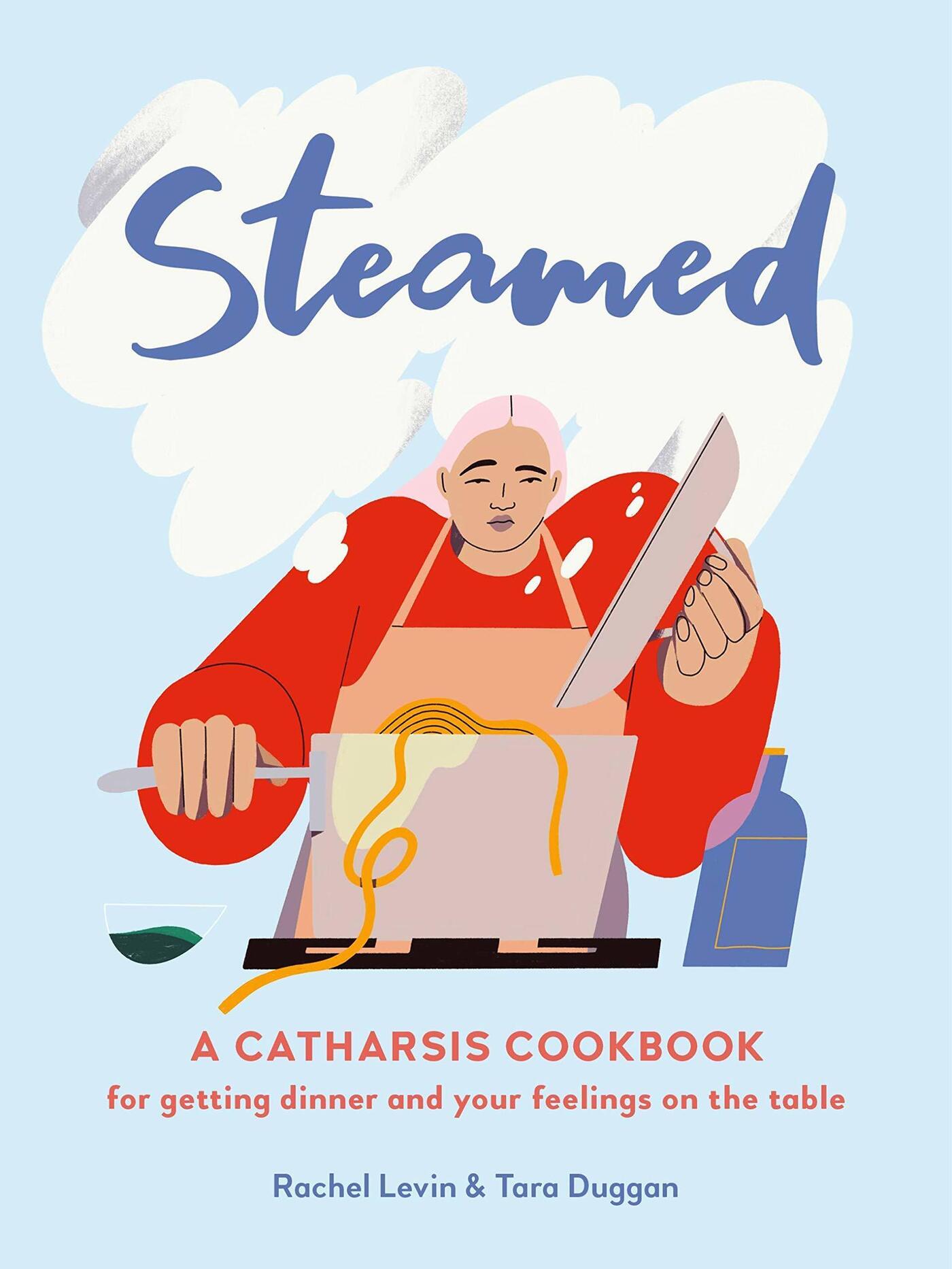 Running Press Levin and Duggan maximize pounding, whisking, grinding and grating. Cooking redirects your energy, they say, forcing you to be in the moment. Spatchcocking chicken can serve as a coping mechanism. But isn't this all vey ... 2020? "It'd be easy to gloss over our cookbook — honestly, to gloss over any cookbook — as a COVID relic right now," Levin admitted in an email. "We conceived of Steamed before COVID, when our world was just in its normal state of major upheaval (climate change, partisan politics, mass shootings, systemic racism) and minor daily irritations. "If anything is certain: the pandemic taught us to persevere, but it, 100 percent, won't be the only challenge we face in life." "Steamed calls out the kitchen for what is, most certainly has been, and always will be: a refuge," Levin added. "Complete with sharp blades for cleaving watermelon and blunt instruments for pummeling chicken thighs and soothing wooden spoons for slowly, mindlessly, stirring yourself into a state of calm." We're still not done processing our emotions from last year, Levin says. And always, we need to eat. SNAPPED ASPARAGUS WITH CHERMOULA, from Steamed SERVES 2 TO 4 Snapping the ends off of asparagus spears is one of the more mindless, meditative tasks in the kitchen. In fact, it could easily cross reference with "Chilling the F Out" section of this book. But listen closely and the snap itself brings a perverse satisfaction of its own. (Is it an asparagus stalk or your obnoxiously loud neighbor's neck? You decide.) Also, the chermoula topping is a natural fit for this chapter, as making this tangy North African condiment takes muscle, just like its pesto counterpart. Instead of the food processor, you can mash the garlic in a mortar and pestle with the salt and spices, then slowly sprinkle in the parsley and cilantro, and finally the olive oil and lemon. If you have any left over, jar the extra chermoula to serve with fish and other vegetables. CHERMOULA 1 garlic clove 1/2 teaspoon kosher salt 1/2 teaspoon ground cumin Pinch of cayenne pepper 1/2 cup fresh parsley leaves 1/2 cup fresh cilantro leaves 1/3 cup extra-virgin olive oil, plus 1 to 2 tablespoons as needed 1 tablespoon freshly squeezed lemon juice ASPARAGUS 1 bunch asparagus (about 1 pound) 1 to 2 teaspoons olive oil Salt Preheat the oven to 400°F. TO MAKE THE CHERMOULA: Place the garlic in a food processor and process until chopped. Add the salt, cumin, and cayenne and pulse to combine. Add the parsley and cilantro leaves and process until finely pureed. Slowly add the 1/3 cup of olive oil and then the lemon juice. Season to taste with more salt, spices, and/or lemon juice; you can also add another 1 to 2 tablespoons olive oil to balance the flavors. TO ROAST THE ASPARAGUS: Hold an asparagus stalk in your nondominant hand with the bottom facing out. Grasp the end and snap where it bends naturally to remove the woody end. Continue with the remaining asparagus. Place the asparagus on a rimmed baking sheet, drizzle with the oil, and sprinkle with salt. Rotate the asparagus to coat in the oil. Roast in the hottest part of the oven until the tips are crispy and the thick part of the stalk is cooked through when poked with a knife; the time ranges from 15 minutes for pencil-thin asparagus to 20 to 25 minutes for superthick ones. Turn once during cooking. Serve the asparagus right away on a platter, drizzled with the chermoula. Excerpted from STEAMED: A Catharsis Cookbook for Getting Dinner and Your Feelings on the Table by Rachel Levin & Tara Duggan. Copyright © 2021. Available from Running Press, an imprint of Hachette Book Group, Inc. This story was edited for radio by Petra Mayer, and adapted for the web by Neda Ulaby and Petra Mayer.  |
|
What to Cook This Week - The New York Times Posted: 13 Jun 2021 07:30 AM PDT  Good morning. Sundays were big cooking days for me, before the pandemic came. I liked to cook large meals and serve them early, to whoever wanted to come, to whoever was hungry, craved connection or needed the meal. I liked the idea of feeding family and friends, the occasional stranger. I liked what the meals brought to those who partook of them. And I liked the regularity of the feeding as much as the food itself. It was a kind of weekly service, something to look forward to, for me and for others. (With impeccable timing, I wrote a book about all this that came out … just before the lockdowns began.) I wonder if those meals will begin again, when it's safe once more to gather in large groups indoors. I hope so. I'm going to start spinning some up, outdoors in a park or garden, somewhere with a lot of air and some comfortable places to sit. I don't know yet how great people are feeling about communal pots of food: those vats of chili or bog I used to throw down, with accompanying bowls of rice. But I do know that few would quibble with a double batch of Tejal Rao's fried chicken biscuits with hot honey butter (above), wrapped in wax paper and handed out with cold beers or plastic cups full of three-herb iced tea. Would a room-temperature version of the Superiority Burger crispy fried tofu sandwich work for my non-meat-eating friends? Perhaps you'll let me know! And blueberry pie bars for dessert? Preparing that meal today for friends would be aces. On Monday, back flying solo or with your pod, take a look at Hetty McKinnon's new recipe for tofu larb. Larb's a Laotian dish, popular in Thailand and increasingly across the world, made of ground meat, sometimes fish. This vegan preparation brings in extra-firm tofu, which requires minimal cooking and soaks up the spicy lime dressing. Even with the do-it-yourself toasted rice powder the recipe calls for — it's essential to the dish's deliciousness — the whole thing comes together in around 30 minutes. That's the best sort of weeknight cooking. For Tuesday's meal, consider Hana Asbrink's new chilled sesame snap pea-chicken salad, with a tangy dressing inspired by Japanese goma dressing. It clings to the chicken and peas and delivers richness and freshness in equal measure. Wednesday's meal, if you can find some wild salmon: everyday salmon with tangy cucumbers and fried shallots. If you can't: roasted fish with ginger, scallions and soy. On Thursday night, I'd like to have kimchijeon, Korean kimchi pancakes. (Or vegetable pajeon. Or squid pajeon. Pajeon everything.) And then on Friday, to round out the week, I'm thinking risotto with sausage and parsley, followed by some binge-watching of "Collateral," on Netflix. There are many thousands more recipes for you to consider making this week waiting on New York Times Cooking. Go see what you find. Then save the recipes you want to make. And rate the ones you've made. You can leave notes on them, too, if you've discovered an ingredient substitution or a better way to execute, for the benefit of yourself or your fellow subscribers. (On that subject, a reminder: You need to be a subscriber to access the site and app. Subscriptions are the gas in our stoves. They allow us to keep doing this work that we love. If you haven't already, won't you consider subscribing to New York Times Cooking today?) We are standing by to help, should you run into problems with your cooking or our technology. Just write cookingcare@nytimes.com. Someone will get back to you. Or write to me directly: foodeditor@nytimes.com. I read every letter sent. Now, it's nothing to do with lamb breast or the taste of cicadas, but I think you will enjoy this New Yorker documentary about a Spanish man who was destined to become a bullfighter but became a drag flamenco dancer instead. See what you think of Meilan Solly in Smithsonian Magazine, on "The Enduring Nostalgia of American Girl Dolls." I've become a fan of The T List, which delivers five recommendations a week from the editors of T Magazine. You can sign up to get it in your inbox here. Finally, big guitar energy to get you to make those chicken biscuits: live Deborah Coleman, "The Dream." Listen to that and I'll be back on Monday.  |
|
Posted: 18 Jun 2021 10:23 PM PDT  Single dads wear many hats, ranging from (their kids') BIGGEST FAN and SUPPORT SYSTEM to LIFE-GUIDE and MONSTER-SLAYER, so it's only fitting to add PERSONAL CHEF to the mix. When it comes to promoting proper health and nutrition, it can be difficult enough to prepare meals for yourself, but adding extra mouths can complicate matters even further. The good news is preparing delicious, healthy meals for your kids and yourself doesn't have to be some overly complicated, painstaking struggle. So have no fear; we are here to dispel any anxiety you may have in the kitchen department. Burrows' Food-Prep Guide for Single Dads
Additional Food-Prep Tips for Single Dads
Burrows Law Group located in Highland Village, specializes in family law including child custody, modifications, divorce and child support. This month we are offering no obligation consults to dads in honor of Fathers Day. Call us at 972-304-6000 or visit us on the web at www.burrowsatlaw.com to talk to an Attorney today. (Sponsored content)  |
| You are subscribed to email updates from "cooking" - Google News. To stop receiving these emails, you may unsubscribe now. |
Email delivery powered by Google |
| Google, 1600 Amphitheatre Parkway, Mountain View, CA 94043, United States | |
from What to Cook https://ift.tt/3xyY5qj